
If your outbound numbers pass STIR/SHAKEN with A-attestation and still show up as “Spam Likely,” you are not doing anything wrong with the standard. Attestation proves the number is really yours. It says nothing about how you dial it. The label comes from a separate carrier reputation model, and that model watches your call patterns, not your signature. Fix the patterns and the label follows.
Attestation and reputation are two different things
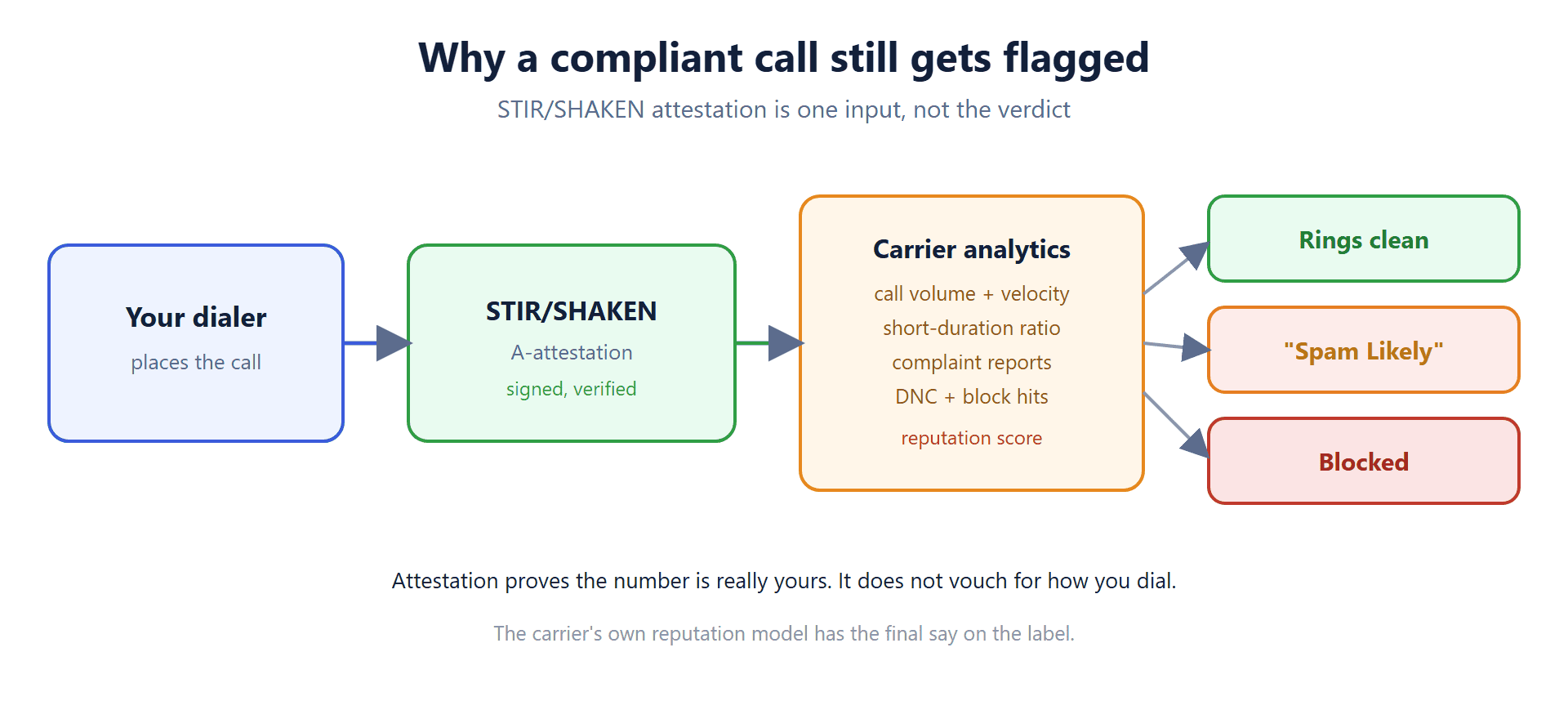
A lot of teams treat STIR/SHAKEN as a spam-label fix. It isn’t one. The framework lets a carrier vouch that the caller ID hasn’t been spoofed. A-attestation means your provider knows you and confirmed you own the number. That’s real value, and you want it. But the phone that rings is a mobile handset running its own screening, fed by the carrier’s analytics engine, and that engine scores every number on behavior.
What the carrier model actually looks at
Every carrier keeps its own recipe, but the signals overlap. High call volume from one number in a short window reads like a spam run. A large share of very short calls, the kind that end in a second or two, looks like people declining a robocall. Complaint reports weigh heavily, and so do repeated hits against numbers that have gone quiet or landed on do-not-call lists. Roll those together and you get a rolling reputation score. Cross a threshold and the label flips.
Six habits that keep numbers clean
Reputation is earned by how you run campaigns, day after day. These are the levers that matter, and good call center software should make each one easy rather than manual.
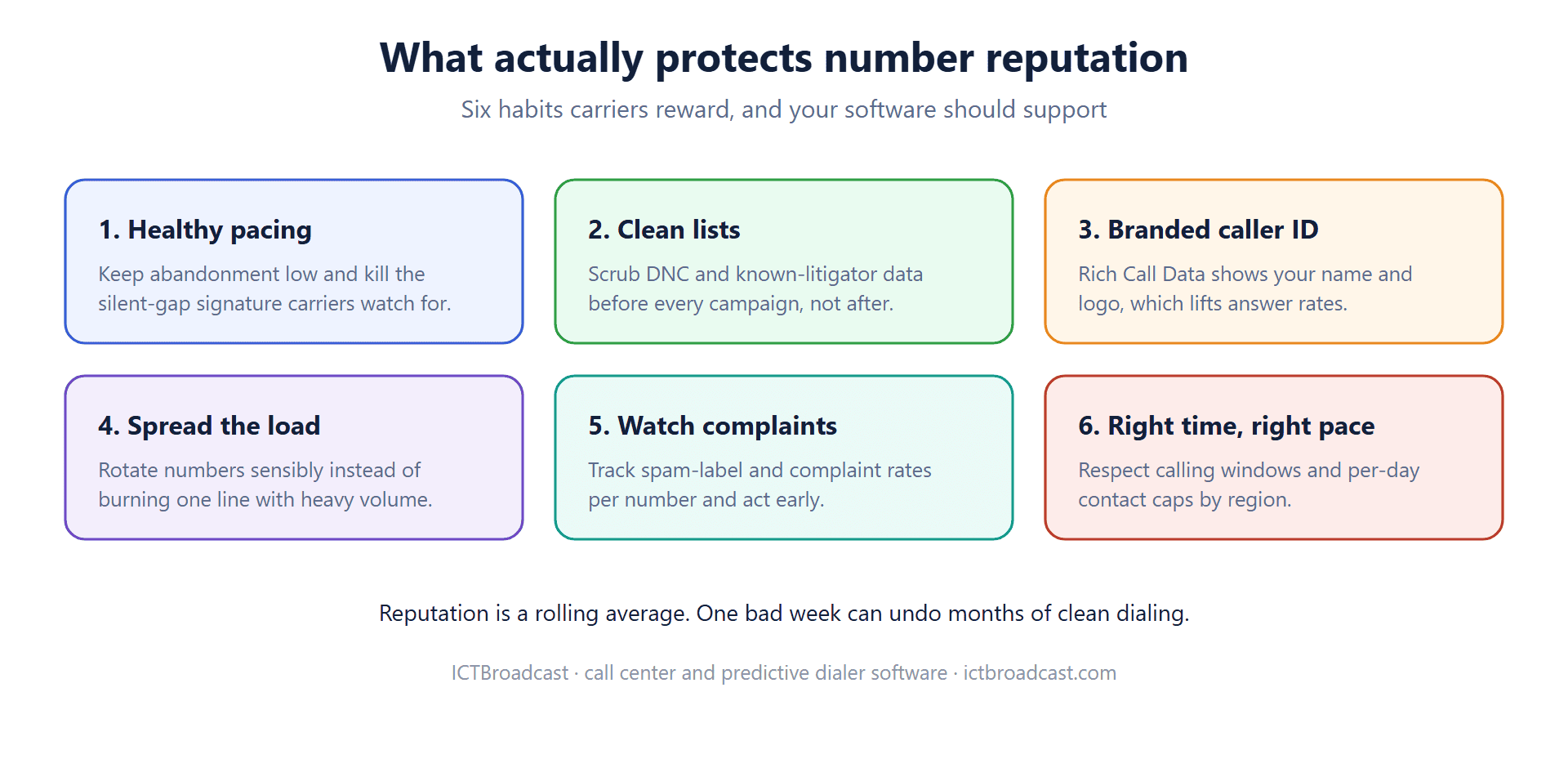
Start with pacing. Keep abandonment low and close the silent gap between an answer and an agent, because that gap is the single clearest robocall tell. Scrub your lists against do-not-call and known-litigator data before the campaign runs, not after a complaint arrives. Add branded caller ID through Rich Call Data so your name and logo show on the screen, which lifts answer rates and shortens the guessing that leads to declines. Spread volume across numbers sensibly instead of burning one line. Track spam-label and complaint rates per number so you can pull a number before it drags the rest down. And respect calling windows and per-day contact caps by region.
None of this replaces STIR/SHAKEN. It sits alongside it. The standard gets you in the door with the carrier, and clean dialing keeps you welcome. For the mechanics of pacing and abandonment specifically, our guide on how predictive dialers work in 2026 goes deeper.
Recovering a flagged number
If a number is already labeled, rest it. Move active campaigns to healthier lines, stop the behavior that triggered the score, and let the rolling average recover, which usually takes weeks rather than days. Some carriers and analytics providers accept remediation or registration requests, and branded caller ID registration can help re-establish trust. What does not help is rotating to a fresh number and repeating the same pattern, because you’ll just train the model again.
FAQ
Does A-attestation guarantee my calls connect? No. It confirms the number is yours and unspoofed. The carrier’s reputation model still decides the label based on your calling behavior.
Why do short calls hurt me? A high ratio of one or two second calls looks like people rejecting a robocall, which is one of the strongest spam signals a carrier tracks.
Is branded caller ID the same as STIR/SHAKEN? No. STIR/SHAKEN authenticates the number. Branded caller ID, delivered through Rich Call Data, displays your name and logo. They work best together.
How long until a flagged number recovers? Reputation is a rolling average, so plan on weeks of clean, low-volume dialing rather than an overnight reset.
Should I just keep buying new numbers? No. If the dialing pattern doesn’t change, new numbers get flagged too. Fix the pattern first.
The short version: STIR/SHAKEN is table stakes, not a shield. Your numbers stay clean when your dialing looks like a business talking to people who want to hear from it.